READY WHEN YOU ARE
Ready to plan the journey?
Search available flights and compare fares when you are ready to put this guide into action.
Search flightsTable of ContentsToggle
UK Visa Proof of Funds: How Much Money Do You Really Need?
Exact Amounts: How Much Do You Need?Proof of Funds by Traveller TypeInteractive Proof of Funds CalculatorReal Case Studies: What Worked — and What Didn'tHow to Prepare Your Bank Statement (Step-by-Step)Why Nigerians Get Refused on Financial GroundsPrintable Proof of Funds Document ChecklistFrequently Asked Questions
Visa sorted. Now let's book your flight.✈️ Book Your UK Flight💷 Quick Funds Reference📰 Related Articles📲 Follow TBILS Travels
- Navigate
- Connect
The definitive guide for Nigerians — with exact naira figures, traveller type breakdowns, real case studies from the TBILS community, an interactive calculator, and a printable checklist. By TBILS Travels Advisory Team · June 1, 2026 · 18 min read · 2026 data · GOV.UK verified £1,000–£2kPer Week Guideline 6 MonthsBank History Needed £1 = ₦1,9202026 Exchange Rate No Fixed Min.UKVI Official Stance Funds Required at a Glance Based on trip length · £1 = ₦1,920 2026 7-day trip₦3.84M–₦6.7M 14-day trip₦7.7M–₦11.5M 1-month trip₦11.5M–₦19.2M 3-month trip₦19.2M–₦34.5M 💷 TBILS Travels Advisory Team Nigeria · UK Visa & Travel Finance Specialists · Helping Nigerians travel since 2019 This guide is compiled from UK Home Office official guidance (gov.uk/uk-visa), real applicant outcomes reported to the TBILS Travels community, and practical experience helping Nigerians navigate the UK visa process. All figures use a 2026 exchange rate of £1 = ₦1,920. Case studies use anonymised first names with permission. Sources: GOV.UK UKVI · CBN Exchange Rate Portal. ⚡ Definition First — What Is Proof of Funds for a UK Visa? What is proof of funds for a UK visa?
Proof of funds for a UK visa is documentary evidence — most commonly an official bank statement — showing that you have enough money to cover all your costs during your stay in the United Kingdom without needing to work or claim public funds. UK visa officers (UKVI) do not use a single fixed number. Instead, they assess whether your funds are sufficient, genuine, consistently maintained over time, and from a credible source. The widely-used practical guideline for Nigerian applicants is £1,000–£2,000 per week of planned stay (₦1.92M–₦3.84M per week at 2026 rates), plus the full cost of your accommodation and return flight. 📌 Source: UK Home Office — "You must show you have enough money to cover all reasonable costs relating to your visit." — gov.uk/standard-visitor-visa 📋 What This Guide Covers
- Exact Amounts: How Much Do You Need?
- Proof of Funds by Traveller Type
- Interactive Proof of Funds Calculator
- Real Case Studies from the TBILS Community
- How to Prepare Your Bank Statement (Step-by-Step)
- Why Nigerians Get Refused on Financial Grounds
- Printable Document Checklist
- Frequently Asked Questions
The UK visitor visa proof of funds requirement is one of the most misunderstood aspects of the entire application process for Nigerians. Many applicants either underprepare (showing too little) or overstage (suddenly depositing large sums that weren't earned organically) — both of which cause refusals. This guide gives you the exact figures, the right approach, and real examples of what works and what doesn't.
Exact Amounts: How Much Do You Need?
The UK Home Office does not publish a fixed minimum. However, based on UKVI guidance, consistent officer feedback, and analysis of Nigerian applicant outcomes, here is the practical standard that works in 2026: 💡 The TBILS Proof-of-Funds Formula
Your required funds = (£1,000–£2,000 × number of weeks) + return flight cost + full accommodation cost + 30% buffer. The buffer accounts for emergencies and signals financial comfort — not just adequacy. 💷 UK Visa Proof of Funds — Required Amounts by Trip Length (Nigeria 2026) Trip Length Min. Living Funds (GBP) + Flight + Hotel (avg) Recommended Total (₦) Verdict 7 days£1,000–£2,000+£1,500 avg₦4.8M–₦6.7MShow ₦5M–₦7M consistently 14 days (most common)£2,000–£4,000+£2,000 avg₦7.7M–₦11.5MShow ₦8M–₦12M consistently 1 month (30 days)£4,000–£8,000+£3,000 avg₦13.4M–₦21.1MShow ₦14M–₦22M + strong ties 3 months (90 days)£10,000–£18,000+£4,000 avg₦26.9M–₦42.2MMust show strong employment/assets Student Visa (per year, London)£1,334/month × 9+ full tuition fees₦23M+ (living only)28-day consecutive hold rule applies ⚠️ These Are Guidelines, Not Guarantees
Meeting these figures does not guarantee approval. Visa officers assess your full application holistically — your ties to Nigeria, purpose of visit, travel history, and consistency of your financial story all matter alongside your bank balance.
Proof of Funds by Traveller Type
The amount you need and how you demonstrate it depends significantly on your employment and financial situation. Here are the five most common Nigerian applicant profiles and exactly what to show for each. 💼 Employed (Salaried)Most Common Profile ₦7M–₦12M 14-day trip Bank statement6 months stamped Salary creditsRegular & visible Employment letterOn company letterhead Leave approvalSigned by HR/manager Avg balance required₦4M–₦8M/month 🎓 Student (Visiting)Sponsor usually required ₦5M–₦9M 14-day trip Own bank statementOr parent/sponsor's School letterCurrent enrollment Sponsor letterParent / guardian Sponsor's bank stmt6 months stamped Sponsor avg balance₦5M–₦10M/month 🏢 Self-EmployedHarder — needs more docs ₦8M–₦14M 14-day trip Business bank stmt6 months stamped CAC registrationBusiness certificate Tax returns / FIRSLast 2 years Business proofInvoices, contracts Avg balance required₦6M–₦12M/month 🏅 Retired / PensionerPension + savings ₦6M–₦10M 14-day trip Pension statementMonthly credits visible Savings account6 months stamped Property/assetsDeeds, valuations Avg balance required₦5M–₦9M/month 🤝 Sponsored (UK Host)Host covers your costs Host shows £4k–£8k 14-day trip Sponsor letterSigned, notarised Sponsor's bank stmt6 months, UK bank Proof of UK statusBRP, passport, settled status Accommodation proofTheir address / tenancy Relationship proofBirth cert / marriage cert
Interactive Proof of Funds Calculator
Use this calculator to get a personalised estimate of the funds you should show in your bank account for your specific UK visa application. UK Visa Proof of Funds Calculator Personalised estimate · 2026 rates · £1 = ₦1,920 Interactive Trip Length (how many days?) 7 days (1 week) 10 days 14 days (2 weeks) 21 days (3 weeks) 30 days (1 month) 60 days (2 months) 90 days (3 months) City / Region (affects daily cost) London Manchester / Birmingham Mixed (London + other city) Accommodation Type Budget Hotel (£50–£70/night) Standard 3-Star (£100–£150/night) 4-Star / Serviced Apt (£180–£280/night) Flight Season Off-Peak (Jan, Feb, Nov) Mid-Season (Mar–May, Sep–Oct) Peak (Jun–Aug, Dec) Traveller Type Salaried Employee Self-Employed Student (with sponsor) Retired / Pensioner Number of Travellers Calculate My Required Funds → 📊 Your Recommended Proof of Funds — Total recommended bank balance per person ⚠ This is an estimate, not a UKVI guarantee. Always consult official gov.uk guidance. Exchange rate: £1 = ₦1,920 (2026 indicative rate).
Real Case Studies: What Worked — and What Didn't
These are real anonymised stories from the TBILS Travels community — Nigerians who applied for UK visitor visas in 2024–2026. We share both approvals and refusals because both teach equally important lessons. Adaeze O. Senior Manager · Lagos · First UK Visa Application · 2025 ✅ Approved — 12 Days Processing
Adaeze applied for a 14-day UK visitor visa to attend her cousin's graduation in Manchester and do some sightseeing in London. She had never held a UK visa before. Rather than rush, she spent 4 months building her bank balance from an average of ₦2.8M to a consistent ₦8.5M per month — all from regular salary credits from her employer. She submitted 6 months of stamped bank statements, an employment letter confirming her ₦750,000 monthly salary, an approved annual leave letter, and a detailed cover letter explaining her itinerary and ties to Nigeria (her daughter's school, her car, her apartment lease). Average Balance Shown₦8.5M/month Monthly Salary₦750,000 Trip Duration14 days Previous Visa HistoryUAE (2023) ✅ Key Lesson: Adaeze's approval came from consistent, explainable income over time — not a large balance. Her UAE travel history also helped. She used a cover letter to tell her financial story clearly. Emeka T. Business Owner · Abuja · UK Visa Refusal · 2025 ❌ Refused — Funds Not Credible
Emeka ran a successful catering business in Abuja and genuinely had the money to travel. However, he made a critical mistake: 3 weeks before his application, he transferred ₦12M from a family member into his account to "top up" his balance — not realising this is one of the biggest red flags visa officers look for. His 6-month statement showed an average of ₦900,000 until the sudden ₦12M jump. The refusal letter cited: "The balance shown does not appear to be organically accumulated and the source of funds cannot be verified." He also had no previous international travel history. Balance Before Transfer₦900k avg/month Balance After Transfer₦12.9M (sudden) Trip Duration10 days Previous TravelNone ❌ Key Lesson: Never park borrowed or transferred funds in your account before a visa application. UKVI officers are trained to spot sudden balance spikes. Emeka's real business income — documented with CAC records and business bank statements — would have been far stronger than the staged deposit. Funmi A. Teacher · Port Harcourt · Refused 2024 → Approved 2025 🔄 Refused → Reapplied → Approved
Funmi's first application was refused in 2024. Her balance was adequate (₦5.8M average) but her bank statements were printed from internet banking — not officially stamped by her bank. The refusal stated her financial evidence was not satisfactory. She also had no cover letter. For her second application 8 months later, she went to her Zenith Bank branch and requested an official bank statement on bank letterhead, stamped and signed by a bank officer. She also wrote a detailed 2-page cover letter and attached her rental agreement and her children's school records as proof of ties to Nigeria. Approved in 9 days. 1st Application Balance₦5.8M avg/month 2nd Application Balance₦7.2M avg/month Key DifferenceStamped statements + cover letter Processing (2nd app)9 days 🔄 Key Lesson: The format of your bank statement matters as much as the figures. Always request an official, stamped, signed statement from your bank branch — not a self-generated internet printout. A cover letter explaining your finances is not optional; it is essential.
How to Prepare Your Bank Statement (Step-by-Step)
Follow these six steps to prepare your proof of funds correctly — in the format that UK visa officers expect. 1 Calculate Your Exact Trip Cost First
Add up every cost: return flight + accommodation for every night + daily budget × number of days + visa fee + pre-travel costs. Use the calculator above. This total is the minimum you must show — but always aim for more. 💡 Use the calculator in Section 3 above for your personalised figure. 2 Add a 30–50% Buffer on Top
Never show exactly what you need. UK visa officers look for financial comfort, not bare adequacy. A balance 30–50% above your calculated trip cost sends a strong signal that you are not financially dependent on the trip. 3 Maintain These Funds for 3–6 Months
Start building your account at least 3 months before applying — ideally 6. Regular salary credits, business income, or organic savings are what officers want to see. The average balance over 6 months matters more than the balance on a single day. 💡 For student visas: funds must be held for a consecutive 28 days before your application date — not just accumulated over time. 4 Request an Official Bank Statement from Your Branch
Visit your bank branch in person. Request an official bank statement printed on bank letterhead, covering the last 6 months, stamped and signed by a bank officer. Online/internet banking printouts are routinely rejected by UKVI. GTBank, Zenith, Access, First Bank, UBA all provide this service — there is usually a small fee (₦500–₦2,000). 5 Write a Financial Explanation Cover Letter
If your statement shows large transactions, salary variation, or any unusual entries, explain them in a cover letter. Identify each large credit (salary, contract payment, property sale, gift from family) and briefly state its source. Attach supporting documents (payslips, contract letters, property sale agreement). Officers want to understand your money — help them do so. 💡 Even if your statements are straightforward, a cover letter referencing your funds directly strengthens your application. 6 Submit All Pages of Your Statement
Never submit a partial or summarised bank statement. Every page of the 6-month statement must be included. Missing pages — even blank ones — are a red flag. Check the statement includes your full name, account number, bank's official stamp, and covers consecutive months with no gaps.
Why Nigerians Get Refused on Financial Grounds
These are the most common financial reasons UK visa applications from Nigeria are refused in 2025–2026 — and how to fix each one. ❌ Sudden Large Deposit
A ₦5M–₦20M deposit appearing in the final weeks before application when the prior 5 months show low balances. Classic "funds parking" — immediately suspicious to officers. ✅ The Fix
Build funds gradually over 3–6 months from organic income. If a large genuine payment arrives (e.g. land sale), attach the sale agreement as documentary evidence of the source. ❌ Internet Banking Printout
An online statement downloaded from mobile banking, printed at home, with no bank stamp, signature, or official letterhead. UKVI routinely rejects these as unverifiable. ✅ The Fix
Always request your statement in person at your bank branch. Ask specifically for an "official statement for visa purposes" — stamped, signed, and printed on the bank's official paper. ❌ Low Average Balance
A current balance that looks sufficient but a 6-month average that is far lower. Officers calculate averages, not just the current figure. A ₦7M balance on day of application but a ₦1.2M average over 6 months raises serious flags. ✅ The Fix
Increase your regular balance over at least 3–4 months before applying. Your goal is a consistently healthy average — not a one-day spike. Officers look at the trend, not the snapshot. ❌ No Employment or Income Evidence
A bank statement showing funds but no accompanying evidence of where that money came from. Officers want to see that your financial standing is stable and legitimate — not just that you have cash right now. ✅ The Fix
Always accompany your bank statement with: an employment letter (salaried), CAC certificate + business bank statement (self-employed), pension statement (retired), or scholarship letter (student). The money needs a story. ❌ Missing Statement Pages
Submitting only the first and last pages of a 6-month statement, or "cherry-picking" months with higher balances while omitting lower ones. This is immediately noticed and treated as deceptive. ✅ The Fix
Submit the complete statement — every page, every month, consecutively. If a particular month had a low balance, include it and address it in your cover letter with an explanation (e.g. school fees payment, medical expense).
Printable Proof of Funds Document Checklist
Use this checklist before submitting your UK visa application. Every item ticked = one fewer reason for refusal. UK Visa Financial Documents Checklist — Nigeria 2026 🖨 Print Checklist Official bank statement (6 months)Branch-stamped, signed by bank officer, on official letterhead All pages includedNo pages missing — even blank pages must be included Funds maintained 3–6 monthsAverage balance is consistently healthy — not just current No sudden large depositsAll credits are organic salary, business income or explained Employment / income proofLetter on letterhead (employed) or CAC + business stmt (self-employed) Leave approval letterSigned by HR or line manager confirming dates of approved leave Financial cover letter writtenExplains your income, funds, trip costs and any large transactions Flight reservation (not bought)Refundable booking showing travel dates only — not paid ticket yet Hotel bookings for every nightConfirmed, refundable accommodation for full stay duration Travel insurance (₦30k+ coverage)Policy covering medical emergencies for trip duration Ties to Nigeria documentedProperty deed, tenancy, children's school letters, spouse employment Sponsor documents (if sponsored)Sponsor letter, their UK bank stmt (6 months), proof of UK status, invitation ✅ All 12 Items Ticked? You're Well Prepared.
A complete, well-documented financial package is the single greatest factor within your control for a UK visa approval. Visa officers approve applications where the story is clear, consistent, and credible — yours can be exactly that.
Frequently Asked Questions
Every question Nigerians ask about UK visa proof of funds — answered with exact figures. What is proof of funds for a UK visa?
Proof of funds is documentary evidence — typically a 6-month official bank statement — showing you have sufficient money to cover your full stay in the UK without working. There is no fixed UKVI minimum, but the standard guideline is £1,000–£2,000 per week of your stay plus flight and accommodation costs. How much money do I need for a UK visa from Nigeria in 2026?
For a 14-day trip: aim to show £4,000–£8,000 (₦7.7M–₦15.4M) consistently in your account over 6 months, covering all trip costs plus a buffer. For a 7-day trip: £2,000–£4,000 (₦3.8M–₦7.7M). Use the interactive calculator above for a personalised figure. How many months of bank statement do I need for a UK visa?
6 months is the safest and most widely accepted standard. Some applicants get away with 3 months, but 6 months gives officers a complete picture of your financial health. The statement must be official, stamped by your bank, and cover consecutive months with no gaps. Can I borrow money to show proof of funds for a UK visa?
No. Temporarily parking borrowed funds in your account is considered deceptive by UKVI. Officers look at your 6-month average, the source of funds, and whether large deposits can be explained. Staged funds are one of the top refusal reasons for Nigerian applicants. What do UK visa officers look for in a bank statement?
Officers look for: consistent regular income credits (salary, business income), a healthy average balance over 3–6 months, no sudden large unexplained deposits, sufficient funds for the full trip plus a buffer, and no large unexplained withdrawals immediately before application. The statement must be official and bank-stamped. What if my bank balance is too low for a UK visa?
Three options: (1) Delay and save — spend 3–6 months building your organic balance. (2) Apply with a UK-based sponsor — a family member or friend in the UK covers your costs with their own documents. (3) Supplement with other assets — property deeds, investment accounts, or pension statements can strengthen a weaker bank balance. Can someone in the UK sponsor my visa application?
Yes. A UK-resident sponsor must provide: a signed sponsorship/invitation letter, their own 6-month UK bank statements (showing enough to cover your costs), proof of their UK status (BRP, passport, settled status letter), and proof of accommodation (their tenancy or mortgage). The relationship between you must be clearly documented. Does the UK Home Office have an official minimum bank balance?
No. UKVI does not publish a fixed minimum for visitor visas. Officers use discretion, assessing whether your specific trip costs are covered with a sufficient buffer. This is why showing your full itinerary cost calculation alongside your bank statement makes your application much clearer and stronger. How much proof of funds do I need for a UK student visa?
For a UK Student Visa (Tier 4): £1,334/month × 9 months for London courses (₦23M+), or £1,023/month × 9 months for outside London (₦17.7M+), plus your full first-year tuition fees. Critically, these funds must be held for 28 consecutive days before your application — unlike visitor visas where it is assessed over 6 months. Why do Nigerians get UK visa refusals on financial grounds?
The most common financial refusal reasons are: sudden large deposits before application, internet-printed bank statements without bank stamp, low 6-month average despite a high current balance, no employment or business income evidence, and missing statement pages. All are avoidable with proper preparation. ✈️
Visa sorted. Now let's book your flight.
TBILS Travels monitors Nigeria–UK flight prices daily. Once your visa is approved, we'll find you the cheapest available fare — guaranteed genuine, verifiable booking reference. Find Cheapest UK Flight →
✈️ Book Your UK Flight
TBILS Travels finds the cheapest Lagos and Abuja to London flights — real tickets, verifiable bookings, daily price monitoring. Get Best Price →
💷 Quick Funds Reference
📰 Related Articles
📲 Follow TBILS Travels
Helping Nigerians travel smarter since 2019. Real visa guidance, verified budget data, and the cheapest flights from Nigeria — all in one place. Navigate
- Home
- Travel Guides
- Flight Tips
- YouTube
KEEP PLANNING
More guides for your journey

Blogs
How to Choose the Right Airlines in Nigeria for Your Next Journey
What considerations should you consider when choosing the Best Airlines in Nigeria for your next trip? Your choice may depend on the route, ticket price, and flight schedule. Baggage options and your travel needs can also affect your decision. Travelers from Nigerian big cities such as Lagos, Abuja, and Port Harcourt can consider various airlines. […]
Read guide →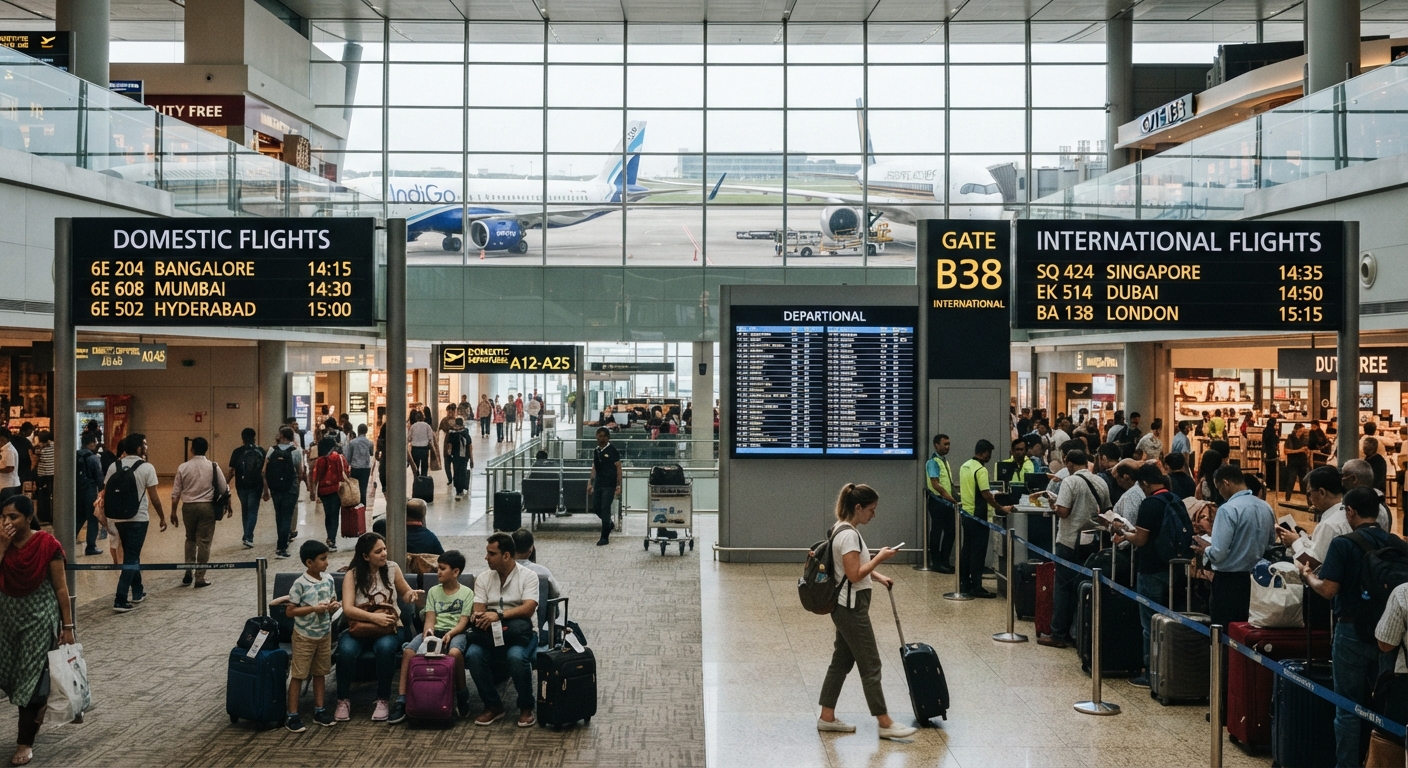
Blogs
Domestic and International Flights in Nigeria: How to Plan the Right Trip
What are some of the things that you should be thinking about before booking your next flight? Domestic and International Flights Nigeria should never be taken lightly. Think about where you’re going, what time you’ll be traveling, and what you can afford. Also, make sure that you have all your documents in order. Lagos, Abuja, […]
Read guide →
Flight
Cheapest Time To Fly From Nigeria To The USA
Route Guide · Nigeria → United States Cheapest Time to Fly from Nigeria to the USA On this route, the airline you pick matters more than the date you fly. Here's how much a hub connection can save you over a direct Delta or United flight — and why the US visa queue, not the […]
Read guide →READY WHEN YOU ARE
Book your next flight with confidence
Compare available fares and get help from a travel expert when you need it.
Search flights